Showing posts with label hero. Show all posts

Monday, 14 January 2019

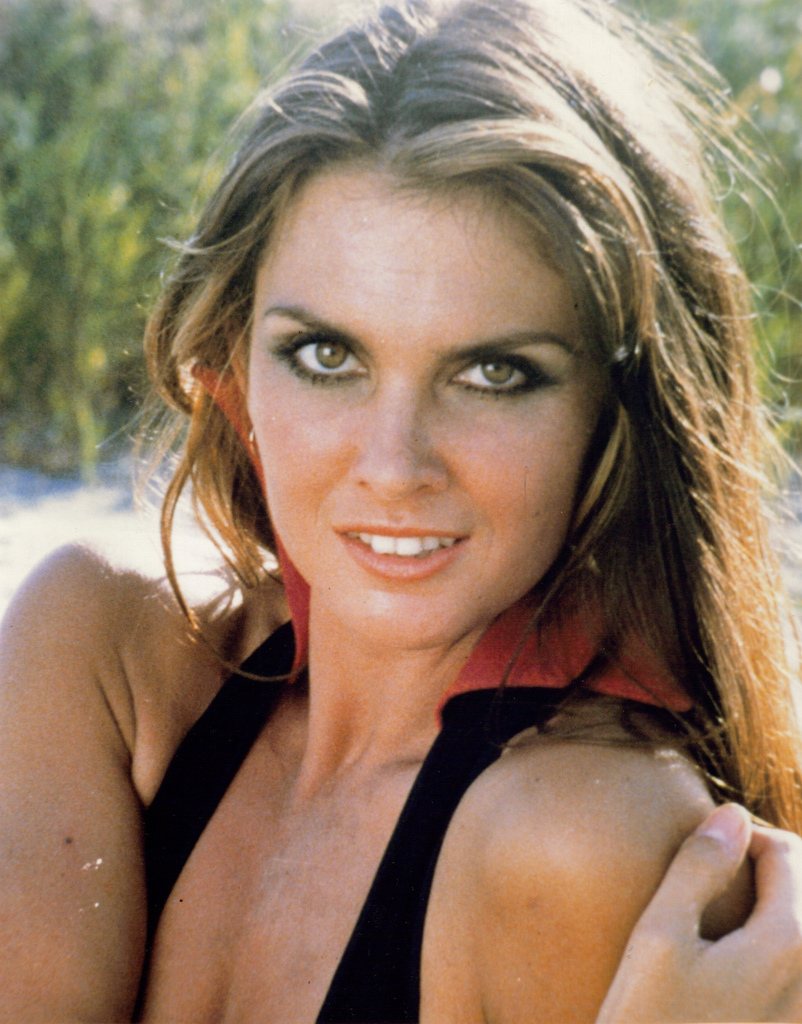
Happy Birthday, Caroline Munro!

Back in the mid-70s, on an advertising hoarding in Corby, I saw my first ad for Lamb’s Navy Rum and fell instantly in love with the model on it.  She had a pretty face, long dark hair and her wet-suit was zipped to her belly.  A little while later, with some school-mates, I went to see The Golden Voyage Of Sinbad and there she was, my first crush!  Later still, Dad took me to see The Spy Who Loved Me and there was the Lamb’s Navy Rum girl, pouty and pretty and trying to kill Bond.

That woman was, of course, Caroline Munro and as she celebrates her 70th birthday, here's a little appreciation.
Caroline Jane Munro was born on 16th January 1949 in Windsor, the daughter of a solicitor.  She grew up in Rottingdean, near Brighton and attended a Catholic Convent School, where she sang in the church choir.

Her original intention was to be an artist and she attended art school in Brighton.  “I wasn’t very good,” she said in interview.  “A friend at the college was studying photography and he needed somebody to photograph and he asked me. Unbeknownst to me, he sent the photographs to a big newspaper in London. The fashion photographer, David Bailey, was conducting a photo contest and my picture won.”

Caroline had won The Evening News’ ‘Face Of The Year’ content, which led to her modelling for Vogue magazine at the age of 17.  David Bailey cast her in his film G G Passion (1966) and she moved to London to pursue modelling, becoming a cover girl for fashion and TV adverts.  She also recorded backing vocals for a record, Tar And Cement, in the company of Eric Clapton and Ginger Baker.  A small part, as a voluptuous Guard Girl in Casino Royale (1967), led to a one-year contract with Paramount Pictures, who cast her as Richard Widmark's daughter in A Talent for Loving (1969).  During the making of the film she met her first husband, actor/musician Judd Hamilton and they married in 1970.
In 1969, she began a lucrative 10-year professional relationship that garnered her a lot of attention.  “I am remembered most as the calendar girl for Lambs Navy Rum,” she writes on her website.  The adverts - featuring Caroline looking feisty in a variety of scenarios - were plastered all over the UK, appearing in magazines, on billboards and even drip mats in pubs.
Sir James Carreras, of Hammer Films, saw her on a billboard outside Victoria Station in London and invited her for a screentest, quickly putting her under contract (she was the only actress to ever officially sign with the studio).  She first appeared as Vincent Price’s dead wife in The Abominable Dr. Phibes (1971) and Dr. Phibes Rises Again (1972), before playing an early victim to the Count in Dracula A.D. 1972 (1972).
Dracula A.D. 1972
She was offered the lead role in Dr Jekyll & Sister Hyde (1971) but turned it down because of the required nudity and she kept that stance throughout her career, even refusing a lucrative offer from Playboy magazine.  “I’m not prudish,” she said in a 2007 interview, “and people can do what they want.  Just for me, it was a personal choice, it’s something I didn’t want to do. Plus, I think it’s more ‘what you don’t see’ that’s more interesting.  For me, it’s nice to have a little mystery.  Maybe I’m an old-fashioned girl, a little bit, anyway!”  Her Hammer contract was fulfilled with Captain Kronos - Vampire Hunter (1974), in which she played the barefoot gypsy girl Carla.  It was originally intended to become a long-running series but the huge success of The Exorcist (1973) effectively killed the low-budget horror market Hammer called their own.  She was offered the lead role in Vampirella (it was never made) but turned it down because of the nudity required.
Captain Kronos - Vampire Hunter
Brian Clemens, who’d written and directed Captain Kronos, helped her get the role of Margiana, the slave girl in The Golden Voyage of Sinbad (1973), for which he wrote the screenplay.  The experience of working on the film and especially with Ray Harryhausen, was a good one - “it was lovely,” she said in interview, “like work-out-of-work and I was very lucky to have done that.”  She is now a Trustee of the Ray and Diana Harryhausen Foundation.
The Golden Voyage Of Sinbad
She also appeared in I Don't Want to Be Born (1975), At the Earth's Core (1976) with Peter Cushing and Doug McClure and The New Avengers episode The Angels of Death (1977), notable for a fight between Caroline and Joanna Lumley's Purdey.
As a nurse in The New Avengers
At The Earth's Core
Caroline’s highest profile role was as Naomi in The Spy Who Loved Me (1977), the bikini-clad henchwoman of Karl Stromberg who is also the helicopter pilot trying to kill Bond in his Lotus Esprit (whilst tipping him what I consider to be the sexiest wink in cinema).

The Spy Who Loved Me
In order to take the Bond film, she turned down the role of Ursa (which went to Sarah Douglas) in Superman (1978).  Following the global success of the film, she was offered roles in Force 10 From Navarone (1978) and The World Is Full Of Married Men (1979), both of which she turned down because of the nudity required.
Starcrash
Caroline continued to work through the 1970s and 1980s, mostly in British and European horror and science fiction films.  She took the lead role in Starcrash (1979), made her first American film with Maniac (1980) and followed that up with The Last Horror Film (1982) which was produced by her husband Judd Hamilton.  Their marriage broke down in 1982 and, after turning down a role in the US daytime soap The Bold And The Beautiful (“I didn’t want to move abroad”), she became a hostess on the British gameshow 3-2-1 (“I never guessed any of the riddles,” she told The Guardian in 2002, “but then neither did Ted”) and appeared in rock videos with Adam Ant (Goody Two Shoes) and Meatloaf (If You Really Want To).  Moving back to film, she appeared in Don’t Open Till Christmas (1984), Slaughter High (1986) (which was produced by her new partner, George Dugdale and suffered from having thirtysomething actors play teens) Paul Naschy's Howl of the Devil (1987), Jess Franco's Faceless (1988) and Demons 6: De Profundis (1989), which would be her last major film appearance.

She married Dugdale in 1990 and retired from acting to raise her two daughters.  “I took a long time off to have my girls,” she said in interview.  “I had [them] late and in that time everything changes and, of course, you’re not offered the roles.  I took, really, ten years off.”
Caroline, Dude and me, the NEC, November 2011
After making more films in 1990s and beyond, she became a regular on the convention circuit and remains very popular today.  I was lucky enough, with Dude, to meet her at the Birmingham NEC for the Memorabilia fair in November 2011 (which I wrote about here).  Awe-struck in her presence, Dude filled the gap when she said “hello” and they started talking to each other.  I did manage to tell her how much of an honour it was to meet her (I thought telling her she'd been my crush since I was 7 might be out-of-order) and she was lovely, chatting easily to both of us and posing for a photograph (her suggestion, when she noticed my camera).  It might have taken me a long time but I did end up, however briefly, with my arm around Caroline Munro and she was as lovely as I could have ever hoped.

"The career was wonderful. I never sought anything, really, I never pursued anything. I was not ambitious. It came to me."
- Caroline Munro

as Stella Star in Starcrash


Taken in Sardinia, during the shooting of The Spy Who Loved Me, 1976

My prized autograph - Dude suggested I get the picture of Caroline with Roger Moore but I chose this one...


Happy birthday, Caroline!

sources:
MI6-Hq: Caroline Munro
xojane.com - Caroline Munro
Interview with Caroline Munro (2007) at An Actors Notebook
Caroline Munro Official Website
Dark Side Magazine - Hammer Glamour: Caroline Munro
The Horror Princess: Caroline Munro by Mark Iveson
My blogpost about meeting Caroline
Wikipedia

Monday, 2 July 2018

Happy birthday, Debbie Harry (an appreciation)

As this year marks the 40th anniversary of Blondie’s commercial breakthrough album Parallel Lines, I thought it’d be a good time to write an appreciation to celebrate Debbie Harry’s 73rd birthday.
Outside CBGB's, 1975
Debbie in Wind In The Willows
Deborah Ann Harry was born Angela Tremble on 1st July 1945 in Miami, Florida and adopted at three months old by Richard Smith and Catherine Harry, who ran a gift shop in Hawthorne, New Jersey.  As a child, she daydreamed that Marilyn Monroe was her real mother and began dying her hair at twelve, experimenting with violet before settling on blonde.  She was, she told a reporter, “making a statement.  I was extraordinary looking, but a lot of people thought I was in a different world than I was.  My inside world was a lot different from my outside world.”  She attended Hawthorne High School and graduated from Centenary College in Hackettstown, New Jersey, with an Associate of Arts degree in 1965.  Moving to New York, she sang with the band Wind In The Willows and worked as a Playboy Bunny, before waitressing at Max’s Kansas City, a popular club that was part of the downtown art and music scene.

In 1974, she joined The Stilettos, with Elda Gentile and Amanda Jones, her future collaborator Chris Stein joined shortly afterwards.  Around this time, she claims she was lured into a car being driven by serial killer Ted Bundy but managed to get away before he could drive off.  Debbie and Stein left The Stilettos, briefly formed Angel and the Snake and then, romantically involved, started the band that would eventually become known as Blondie.
The original Blondie line-up in 1976 (from left) - Gary Valentine, Clem Burke, Debbie, Chris Stein
Blondie, named for what men often called Debbie, began playing clubs in downtown New York, becoming regulars at CBGB’s and Max’s Kansas City.  Their debut album, Blondie, was released by Private Stock Records in December 1976, becoming a minor hit in Australia.  Their second album, Plastic Letters, was released in February 1978 and promoted heavily in Europe, peaking at number 10 the UK, with the lead single Denis, reaching number 2 on the UK charts.  A successful UK tour in 1978 saw them gain popularity which led into their third album, Parallel Lines, released in September by Chrysalis Records.  Produced by Mike Chapman, it was a number 1 hit in the UK, number 2 in Australia and number 6 in the US and the fourth single, Heart Of Glass, broke them worldwide, becoming one of the biggest singles of 1979.  Their fourth album, Eat To The Beat, was released that October and was a UK number 1 but not as successful, though a video was made for each song, making it the first ever video album.  In 1980, they released the single Call Me, which was a number 1 hit in the UK, US and Canada.  Their fifth album, Autoamerican, was released in November 1980 and included Rapture, the first song featuring rapping to reach number 1 in the US (the band were friends with hip hop and graffiti artist Fab Five Freddy).


Debbie in the studio with Nile Rodgers
Blondie took a year-long hitatus in 1981, during which Debbie released her first solo album (Koo Koo, produced by Nile Rodgers), before regrouping and releasing their sixth album The Hunter in 1982.  It wasn’t as successful as the others and a planned world tour was cut short due to low ticket sales, two major factors - along with internal struggles - that caused the band to split.

In 1983, Chris Stein was diagnosed with pemphigus vulgaris, a rare autoimmune disease that affects the skin and mucous membranes and Debbie took several years off to care for him.  Their relationship broke up in the late 80s but they continued to work together.
Chris Stein and Debbie Harry, 1982
She released a second solo album, Rockbird (which is fantastic - I love the title track but the biggest hit, reaching number 8 in the UK charts, was French Kissing In The USA) in 1986 and her third, Def, Dumb & Blonde in 1989.  As a solo act, she toured extensively from 1989 to 1991 with Chris Stein and I managed to see her supporting INXS at Wembley Stadium in July (which I wrote about here).  Her fourth album, Debravation, was released in 1993 - it marked the end of her relationship with Chrysalis Records - and Necessary Evil, the fifth, was released in 2007.
She joined The Jazz Passengers as lead vocalist for their 1997 album Individually Twisted and, in the same year, reunited with her Blondie colleagues for a European tour.  Their first album in 15 years, No Exit, was released in 1999 and the single Maria was a number 1 hit in 14 different countries, including the UK.  The band, as well as releasing a further three albums, have continued to tour and in 2014 played Glastonbury.  They were inducted into the Rock and Roll Hall of Fame in 2006.
Punk survivors - Debbie and Iggy Pop, photographed as part of the 2015 Paco Rabanne campaign
Alongside her work with Blondie, Debbie also appeared in films such as Union City (1980) and the excellent Videodrome (1983 - which I wrote about here), as well as Forever Lulu (1987), Hairspray (1988), Heavy (1995) and Copland (1997).
With James Woods in the excellent Videodrome (1983)
VH1 voted her 12th in their 100 Greatest Women of Rock & Roll poll in 1999 and named her 18th in the 100 Sexiest Artists Of All Time in 2002.  A strong advocate for gay rights and same-sex marriage, she is also a fundraiser for charities concerned with fighting cancer and endometriosis.
On the loft roof, 1977
“I was hugely influenced by Debbie Harry when I started out as a singer and songwriter. I thought she was the coolest chick in the universe.”
 - Madonna

Shirley Manson, of Garbage, told Pop Matters, "I have the most immense respect for and love for [her] - for so many different reasons, but most of all because she’s an incredible person and an amazing woman. She’s incredibly generous to all other young artist who have followed in her wake, and there have been so many of us. She has never treated anyone with jealousy or with any kind of superiority. She’s just a gorgeous creature, who deserves to be remembered.”
The Queens of punk and new wave, Hyde Park Hotel 1980 (photo by Chris Stein)
Debbie, Viv Albertine, Siouxsie Sioux, Chrissie Hynde, Poly Styrene, Pauline Black
"The idea was to be desirable, feminine, and vulnerable, but a resilient, tenacious wit...rather than a poor female, sapped of her strength by [some] hearthrob..."
- Debbie Harry, interviewed by Victor Bokris for Making Tracks

“Iconic? I guess so. But the word 'iconic' is used too frequently–an icon is a statue carved in wood. It was shocking at first, when I got that reference. It was a responsibility, and it's impossible to live up to - you're supposed to be dead, for one thing.”
 - Debbie Harry
Part of the Parallel Lines promotional materials, I had this poster on my bedroom wall for years as I was growing up
Debbie Harry was, in my impressionable youth, one of my earliest crushes and I fell in love with both her and her music.  I wasn't old enough - or lucky enough - to catch Blondie live in their heyday but I’ve now seen her three times in concert and each one was a real treat.  In the 70s, with her hair, high cheekbones and effortless cool (along with that wonderful air of studied indifference), she was a star and, as far as I’m concerned, she absolutely remains one.

Happy birthday Debbie!


Monday, 11 June 2018

Star Wars At 40 (pop-up 5) - An Appreciation of Ralph McQuarrie


Ralph Angus McQuarrie (13th June 1929 - 3rd March 2012) was born in Gary, Indiana and began art classes at the age of ten.  After graduation and active service in the Korean War (where he survived a shot to the head thanks to his helmet lining), he studied at the Art Centre College of Design in California - alongside ‘visual futurist’ (to be) Syd Mead - and in 1950 began working at the Boeing Company in Seattle as a technical illustrator.  Moving to California, he worked for Reel Three which produced illustrations for NASA that were used on CBS News’ live coverage of the Apollo space program and that led to a call from Hal Barwood & Matthew Robbins who needed illustrations to help sell a film they were planning.  Whilst Ralph wasn't particularly interested in sci-fi, he “was in love with airplanes and spacecraft" and working on the illustrations “felt like that was really the place I should be. I had found what I should be doing.”

Though Barwood & Robbins, Ralph was contacted by their friend George Lucas for help with his own sci-fi project.  "He was interested in talking to me...about a big space-fantasy film.  A couple [of] years went by and George did American Graffiti…then one day he called to see if I'd be interested in doing something for Star Wars.”

with George Lucas
The script was complicated and Lucas knew he needed something to sell it, without having to rely on the imaginations of the studio executives.  “George said, I’ll give you this script, read it, and when you come to something you like, make a little pencil drawing and we’ll look at it later.”  They met every couple of weeks with Ralph doing his “best to depict what I thought the film should look like. I didn't think the film would ever get made. My impression was it was too expensive. There wouldn't be enough of an audience. It's just too complicated. But George knew a lot of things that I didn't."

On the strength of the paintings and the pitch, Lucas was given funding to start pre-production.  One of the most famous pictures was one of the first - C3PO and R2-D2 in front of a cliff on Tatooine.  “George wanted Tatooine to be a desert planet with twin suns...so I was thinking, 'Desert, extreme heat, no plants, just rocks and dust”.  C3PO came from a “photograph of the female robot from Metropolis (1927), [George] said he’d like Threepio to look like that, except to make him a boy.”  Anthony Daniels saw the painting (which you can see at the end of this post) when he went to audition and was touched by the image.  “Without his inspirational art,” Daniels says in Empire Of Dreams, “I would not be C-3PO. I once said to him, ‘This is all YOUR fault!’ Then I thanked him.”

Concept sketch of the heroes
As well as the sets and ships, Ralph also designed R2-D2, Chewbacca and Darth Vader.  In the script, Vader had flowing black robes “that would flutter in the wind” but as the Sith Lord had to cross between his Star Destroyer and the Rebel Blockade Runner in the vacuum of space, Ralph suggested he needed a breathing mask.  Lucas agreed, suggested adding a samurai helmet “and Darth Vader was born. Simple as that.”

“Working on Star Wars was a special opportunity to start from the ground up,” Ralph later said.  “Being able to create new characters, vehicles and different worlds ... and since when I started it wasn’t even clear that the film would be made, I didn’t have to limit myself.”

As part of the newly created Industrial Light & Magic (ILM) - “there was some sort of a rumour going around that [nobody] over thirty worked on Star Wars and I was 45” - he also produced several key matte paintings, his first foray into the artform.

Following his work on Star Wars, he produced designs for the Mothership in Steven Spielberg’s Close Encounters Of The Third Kind (1977) and worked on a planned Star Trek film (Planet Of The Titans) which never happened.  Ralph moved on to the Battlestar Galactica TV series (1978), designing the craft (his original version of the Viper was re-worked for Buck Rogers In The 25th Century (1979)), the aliens and Cylons, producing 24 paintings in total to help sell the project.

Working on the Cloud City landing platform matte painting
from "The Empire Strikes Back"
Back in the ILM fold, Ralph was concept designer for the Star Wars Holiday Special (1978), which notably featured the debut of Boba Fett, arguably one of his most popular character designs.  For The Empire Strikes Back, he produced concept art and production paintings - including the first glimpse of the AT-ATs - as well as several matte paintings.  He also played the uncredited role of General Pharl McQuarrie at the Hoth base (of which an action figure was made for the Star Wars 30th anniversary) before leaving ILM to go freelance.

He worked on two back-to-back Steven Spielberg films, creating on-screen artwork for Raiders Of The Lost Ark (1981) and the spaceship from E.T. - The Extra Terrestrial (1982).  “Steven was at ILM one day and I talked with him for about five minutes - he said he [wanted] ET’s space ship to look like Dr. Suess designed it. I thought that was kind of interesting, very off the wall.”
top left - artwork of "the power of the ark" as seen in Raiders Of The Lost Ark - right - ET's ship
bottom - concept design for the Mothership in
Close Encounters Of The Third Kind
Ralph went back to ILM as conceptual artist for Return Of The Jedi and after his work on the project was finished, George Lucas made a point of thanking him in front of everyone.  Nilo Rodis-Jamero, also a designer on the film, said in interview, “Ralph stood up and said, ‘I was one of the first people that George hired,’ because Ralph is an unbelievably humble man. George got up and said, ‘No, you were the first one.’”

from left - Ken Ralston, Ralph McQuarrie,
Molly Ringwald (presenter), Scott Farrar and David Berry
He was the concept artist on Cocoon (1985) for which ILM won the Oscar for Best Visual Effects.  Supervisor Ken Ralston said, “Ralph is a big reason why we were honoured. Simply stated Ralph McQuarrie has the ability to paint dreams.”

After working on Masters Of The Universe he finally got his Star Trek chance when, working at ILM, he produced concept designs for  23rd century San Francisco, Starfleet Headquarters, shuttlecrafts, whale tanks, and storyboards for the fourth film The Voyage Home.  He reunited with Matthew Robbins to work on *batteries not included (1987) and his last credit was for Nightbreed (1990) where he painted the history of the breed as a sixty-foot long mural which features heavily in the opening credits.

He was offered the design role for the Star Wars prequel trilogy but felt he’d “run out of steam” and retired, though his Star Wars concept paintings were subsequently displayed in art exhibitions, including the acclaimed 1999 show Star Wars: The Magic Of Myth.  As it is, his original designs and unused concept art are still influencing the saga, both with the animated TV shows, the sequels and the stand-alone films.

McQuarrie died at his Berkeley, California home from complications of Parkinson's disease and is survived by his wife Joan.

Following his passing, George Lucas said, "His genial contribution, in the form of unequalled production paintings, propelled and inspired all of the cast and crew of the original Star Wars trilogy. When words could not convey my ideas, I could always point to one of Ralph's fabulous illustrations and say, 'do it like this'.  We will all be benefiting from his oeuvre for generations to come. Beyond that, I will always remember him as a kind, patient and wonderfully talented friend and collaborator.”


Filmography
Star Wars (1977) (production illustrator)
Close Encounters of the Third Kind (1977) (spaceship designer)
Battlestar Galactica (1978) (production and concept illustrator)
Star Wars Holiday Special (1978) (production illustrator)
The Empire Strikes Back (1980) (design consultant and conceptual artist)
Raiders of the Lost Ark (1981) (illustrator)
E.T. the Extra-Terrestrial (1982) (scenic artist/spaceship design)
Return of the Jedi (1983) (conceptual artist)
Cocoon (1985) (conceptual artist) Oscar for Best Visual Effects
Masters of the Universe (1987) (conceptual artist)
Star Trek IV: The Voyage Home (1986) (visual consultant)
*batteries not included (1987) (conceptual artist)
Nightbreed (1990) (conceptual artist)


On holiday in Torquay in 1989, I picked up a copy of Ralph's Star Wars portfolio from a second-hand bookshop (and thankfully kept hold of it as they're worth a fortune now).  Having been a big Star Wars fan from the off, I'd seen his work a lot (that little RMcQ was a real guarantee of quality) and I've always been impressed with the scope and vitality of the images.  Here are a few of my favourites...


Concept art for Battlestar Galactica
The Empire Strikes Back Bounty Hunters
 You can read my post on the matte paintings from Star Wars (including several by Ralph) here

2017 marked the 40th anniversary of Star Wars, which was released in the US on 25th May though it didn't hit the UK until 29th January 1978 (following a 27th December release in London).  I was lucky enough to see it in early 1978 and it remains my favourite film to this day.

To mark the anniversary, I ran a year-long blog thread about the film with new entries posted on the first Monday of each month.

May The Force Be With You!

Find all the entries in the thread here